
What is the best sitting posture?
If you’re reading this, you probably spend at least 5 hours a day sitting and working in front of a laptop. And it’s very likely you’re trying to find the best sitting posture to reduce the aches and discomfort that come from all that time spent working.
You know—neck pain, headaches, forward slouching, hip tightness, pinching, and that overall sluggish feeling from sitting too long.
There is a solution to this issue—but it’s not about finding the best sitting posture…
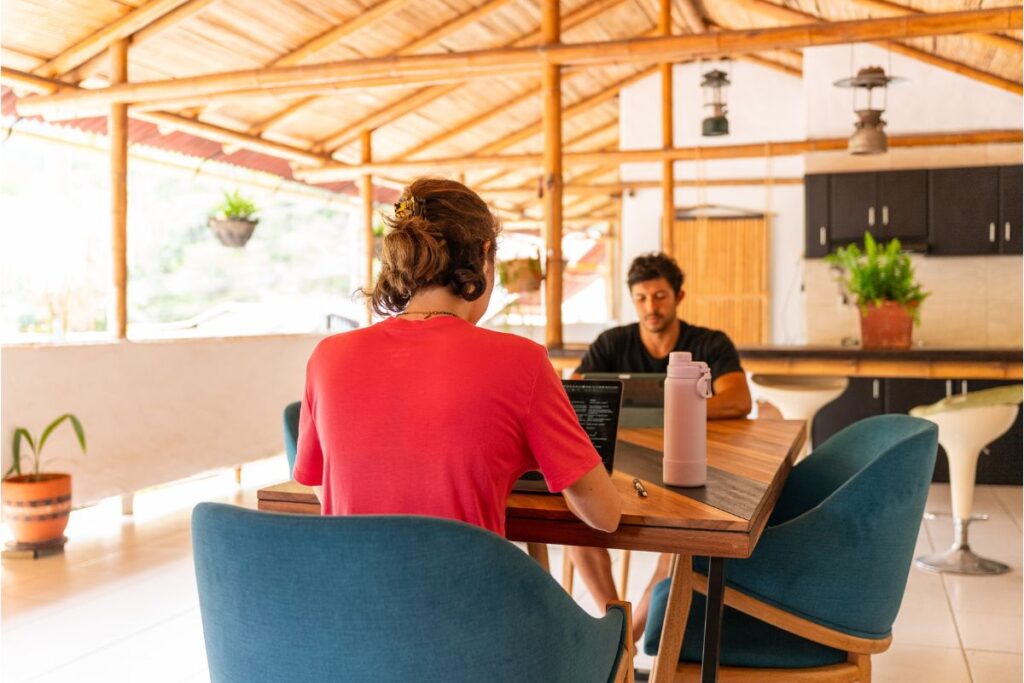
Your Best Sitting Posture is the NEXT one
There are only postures. Whether you sit, stand, or lie on the ground, the best “sitting” posture in front of your laptop is the next one.
It doesn’t matter if you have the perfect ergonomic chair or desk—if you spend 5+ hours in the same position, problems will arise.
The issue is not your setup.The issue is a lack of variety.
What Happens When You Sit Too Much?
Our bodies adapt to what we constantly expose them to—and we lose what we don’t use.
In most cases, we sit in a chair while working. Over time, your body adapts to that shape. Here’s what that typically looks like:
- Ankles, knees, and hips flexed at 90 degrees
- Glutes and abdominal muscles relatively inactive
- Forward rounding of the spine and shoulders
- Forward head position
- Arms held at chest height
The Result on Your Body
- Tissues around the ankles, knees, and hips shorten and lose full range of motion
- Glutes and core weaken and tighten
- The spine and shoulders round forward, reducing space in the thoracic cavity (where your lungs are)
- The head shifts forward, increasing strain on the neck and causing pain or headaches
- Chest (pec) muscles tighten, limiting overhead and backward arm movement
You might think training solves this—and it helps—but it’s not enough.
You sit for 5+ hours a day…
And you use machines in the gym where you sit…how long do you train? Maybe 1–2 hours?
You see the imbalance.
The Real Solution: Change Your Posture
The best posture is the next one.
Sit in your chair for a while. Then switch to a standing desk. Spend time sitting on the floor—cross-legged, one leg bent, one extended, or both extended. You can even lie on your stomach for a bit.
Then go back to your chair—and repeat.These variations keep your body moving—and movement is the real solution.
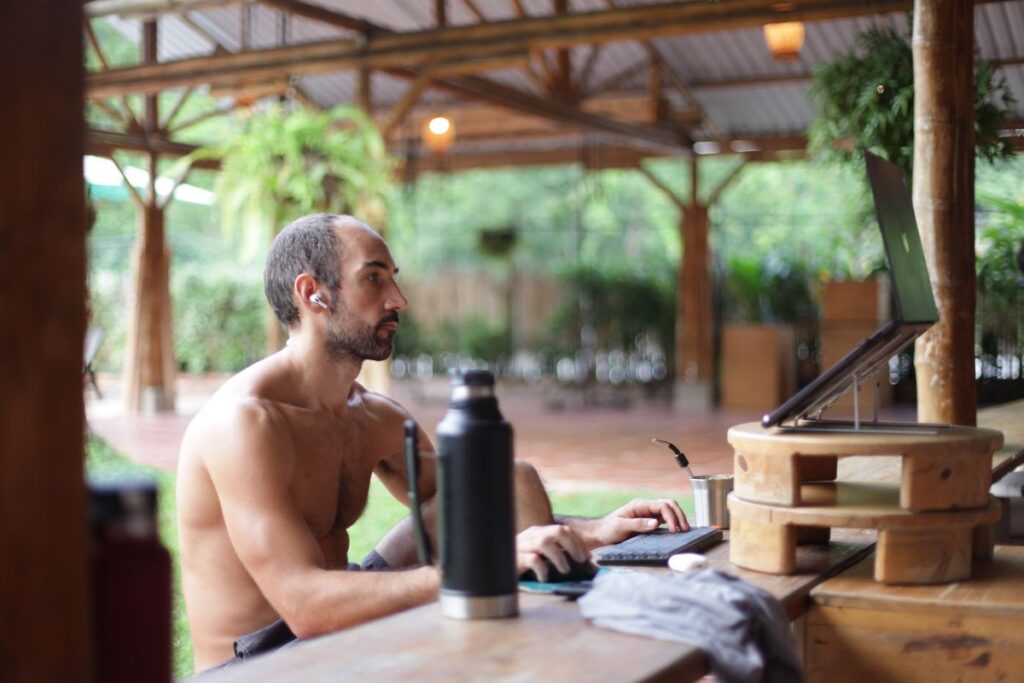
Build a More Dynamic Workspace
Your body is designed to move in many different ways. The more variety you introduce, the better your chances of avoiding stiffness, discomfort, and long-term pain.
This will take some creativity and trial and error to find what works best for your focus, workflow, and preferences.
A simple rule of thumb:
- Have a standard desk and chair
- Have a standing setup
- Have a ground-level setup
Bonus: If you have a bar or rings to hang from, even better (we’ll cover this in a future post).
Final Thoughts
Don’t look for the best sitting posture.
Look for all of them—and rotate between each one.
Take a look at your workspace and ask yourself:
How many working positions do I actually have?
The more, the better.
Want to Learn More?
If you’re curious to make simple, effective changes in your daily life, follow us on Instagram. We’re constantly sharing practical movement tips to help you feel and move better.
Gracias. See you next time.
